



GDAClinical Strength Glucose Disposal Agent
GDA
Free Domestic Shipping on Orders Over $150

GDA
-
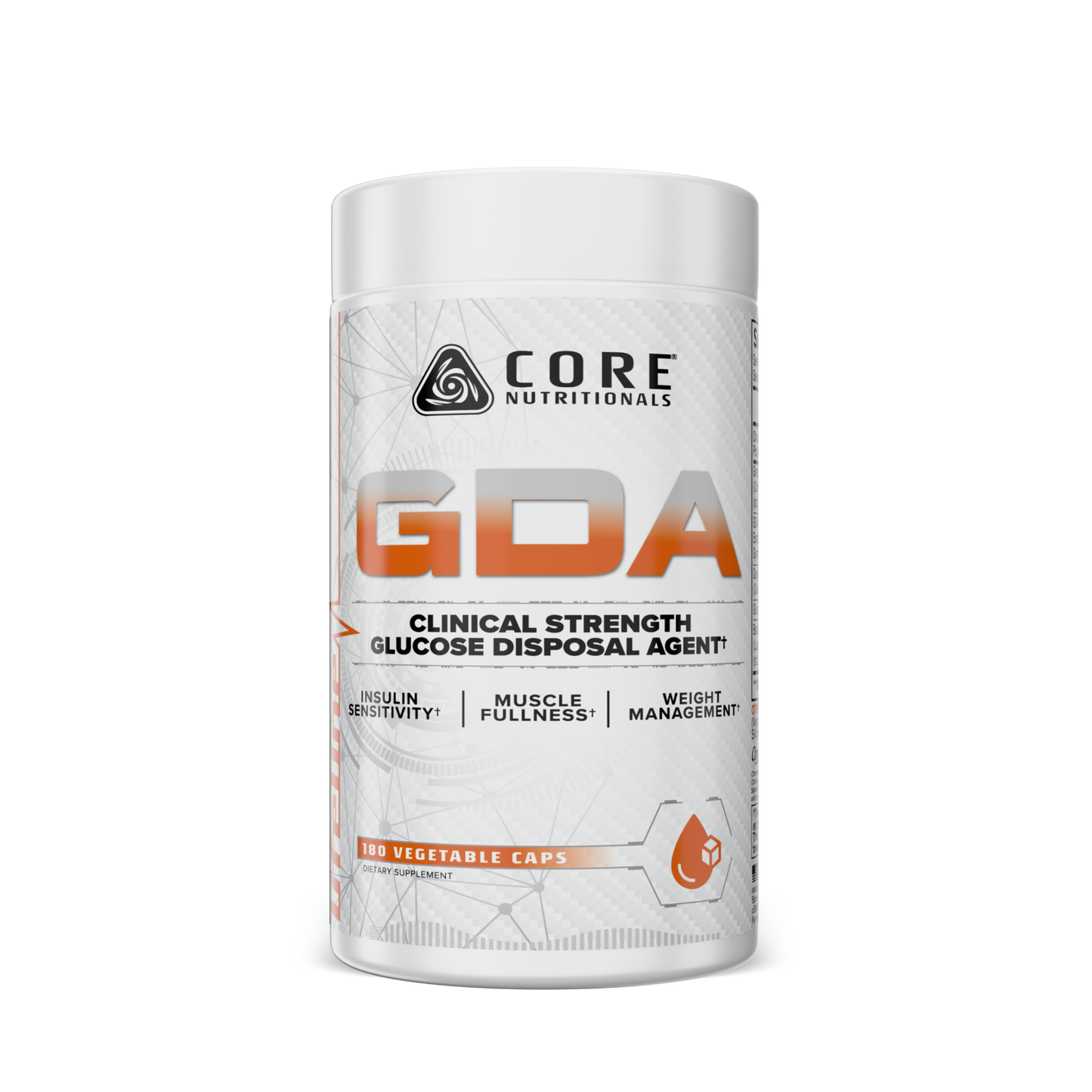
Core Nutritionals® Lifeline GDA has redefined what a true glucose disposal agent should be. While most GDAs on the market rely on single-pathway, underdosed formulas, Core Life Line GDA targets multiple critical pathways through clinical or near-clinical serving sizes. More importantly, it utilizes non-redundant ingredients that precisely target both glycogenic (glycogen-creating) and lipolytic (fat-mitigating) processes.
The effectiveness of Core Life Line GDA lies in its ability to influence key pathways of glycogen storage and lipid metabolism. This includes increasing GLUT4 translocation to enhance glucose uptake into muscle cells, improving insulin sensitivity, and modulating the body’s response to carbohydrate intake at both the digestive and cellular level.
While other GDAs may attempt to target similar pathways, Core Life Line GDA does so through multiple distinct mechanisms. Rather than relying on a single ingredient approach, it maximizes glycogen storage while minimizing the likelihood of excess glucose being stored as body fat.
When you consume carbohydrates, they are broken down into glucose and released into the bloodstream. From there, glucose is either directed toward muscle tissue—where it can be stored as glycogen and used for performance—or toward adipose tissue for storage as fat.
By enhancing glycogen storage, Core Life Line GDA helps fuel performance, recovery, and muscle fullness, while acting as a safeguard against fat storage. At the same time, it works to stabilize blood glucose levels and reduce pathways associated with fat accumulation.
The result is a comprehensive, multi-pathway system designed to optimize nutrient utilization, support performance, and promote a leaner physique.
Core Life Line GDA sets a new standard for GDAs.
Scientific Write-Up: Chromium (as Chromium Picolinate) (Chromax®)
Chromium, a naturally occurring trace element in many foods, has been linked to benefits including weight management, body composition, cognitive health, glucose metabolism, appetite control, and energy support.
Chromax® Chromium Picolinate is a highly bioavailable form of chromium that has been extensively studied for its benefits listed above.
Perhaps chromium picolinates’ most important function that leads to these benefits is in its ability to regulate insulin through carbohydrate, lipid, and protein metabolism.
The proposed mechanism of action is through its ability to regulate glucose utilization and increase sensitivity of insulin receptors by prolonging kinase activity through stimulating the tyrosine kinase pathway, thus leading to improved glucose absorption.
This further then leads to more stable blood sugar, which can reduce cravings, overall caloric intake, and reduce cravings, thus leading to improved body composition.
Chromax® Chromium Picolinate is particularly formulated to be up to 15x more absorbable than other traditional forms of chromium, leading to more efficient and consistent benefits.
When the body can more efficiently break down food particles and shuttle their molecules to their targets for usage, the body has a much higher chance of performing optimally.
Green Coffee Extract (Coffea robusta) (bean) (50% Chlorogenic acid)
Coffee is widely recognized as not only the most consumed psychoactive compound on earth, but perhaps also the most consumed plant material in general.
Due to the extent of coffee consumption by humans, several species of coffee beans, along with their bioactive constituents, have been research targets for a number of therapeutic pathways.
The most abundant polyphenol in coffee is Chlorogenic acid (CGA).
An abundance of data suggests that CGA has numerous physiological properties, and that its most potent physiological effects are hypoglycemic (blood sugar-lowering) and lipolytic/anti-lipogenic in nature.
Recent evidence demonstrates that CGA is a powerful and novel glucose modulator, in vivo, in both healthy and diseased populations.
Research shows that one of CGA’s potential hypoglycemic mechanisms is insulin sensitization – in other words, making existing cells more sensitive to the glucose shuttling effects of insulin.
In a trial on streptozotocin (STZ) (45 mg/kgbw) nicotinamide-induced diabetic rats, a 5mg/kgbw dose of CGA significantly mitigated the diabetic effects of STZ and caused an increase to glucose uptake.
Of note, the 5mg/kgbw dose of CGA used in the animal trial is significantly less than the mg/kgbw serving size of CGA included in Core LOAD. (Assuming an average Core LOAD consumer bodyweight of 75kg.)
An additional trial in obese Zucker rats demonstrated that CGA is capable of improving glucose tolerance and insulin resistance.
The trial found that the CGA group had better glucose tolerance, higher insulin sensitivity index (ISI), and lower HOMA-IR (insulin resistance) index.
A trial in healthy humans showed similar promise.
Healthy, human subjects were challenged with an acute serving of CGA and then assessed for hepatic glucose output, blood glucose levels, and glucose tolerance.
CGA induced a significant reduction in peak plasma glucose levels – an important fact, as glucose fluctuations and/or chronically excessive blood glucose levels are associated with fat cell proliferation.
Unlike the animal trial, however, the human trial hypothesized that CGA worked through a different, more novel mechanism: attenuating glucose absorption in the gastric uptake phase.
In this trial, CGA effectively CGA functioned as both an insulin sensitizing agent and a glycemic index lowering agent.
In addition to both the above mechanisms, CGA was shown to inhibit the activities of α-amylase and α-glucosidase – two enzymes responsible for metabolizing carbohydrates into saccharides.
As a result, CGA again reduced postprandial (post-meal) blood glucose concentration.
The potentially novel glycemic index-lowering and carbohydrate metabolism effects of CGA were confirmed in two further trials: one in which CGA intake significantly reduced fasting glucose and insulin levels in obese men, and another in which CGA lowered the glycemic impact (how quickly and to what degree plasma glucose was increased) and lowered blood glucose levels.
CGA is an interesting compound due not only to its potent insulin-sensitizing and glycemic effects, but also its novel action on lipid metabolism.
A 2006 trial found that CGA – in addition to caffeine and other polyphenols found in green coffee bean extract – suppressed body weight gain and the accumulation of visceral fat in mice.
Again, the mechanism of action was quite unique: CGA was found to inhibit and delay the absorption of fat at the gastric uptake phase and reduce lipid metabolism in the liver.
In a separate trial on obese rates, CGA significantly reduced body weight, visceral fat mass (adipose tissue surrounding the internal organs), and plasma insulin concentrations.
The authors of this trial hypothesize that, in addition to the profound effects on glucose metabolism noted above, CGA reduced body weight and fat mass due to increased fatty acid beta-oxidation activity and peroxisome proliferator-activated receptors alpha expression in the liver.
In sum, CGA is the perfect confluence of glycogenic, glycemic-impact lowering, insulin sensitizing, and anti-lipogenic factors.
Its inclusion as a key ingredient in Core GDA, at well above clinical serving sizes, functions to promote healthy blood glucose levels, healthy bodyweight, and healthy insulin release.
GS4 Plus® Gymnema sylvestre Extract (leaves) (25% gymnemic acids)
Gymnema sylvestre is a plant endemic to the tropical and sub-tropical regions of Southeast Asa, including India and China. In these countries, G. sylvestre functions as a treatment for many pathological conditions, including diabetes and hypercholesterolemia – in fact, the Ayurvedic name for G. sylevestre is “Gurmar,” or “destroyer of sugars.” The principle bioactives in G. sylvestre, gymnemic acids, are concentrated highly in the leaves and have been isolated and observed for their glucose shuttling properties.
In a clinical trial in humans using a G. sylestre extract dietary supplement, 65 participants were administered G. sylvestre for 90 days. After the 90 day treatment, the participants were assessed for a number of biometrics, including prenadial (pre-eating) plasma glucose concentrations and HbA1c (haemoglobin A1c, a key marker for diabetes) levels. The researchers found that 90 days of supplementation with G. sylvestre lowered prenadial blood glucose by 11%, postpranadial glucose by 13%, and Hb1Ac by .8% (a seemingly small figure, but in fact statistically significant).
In another, small clinical study, fasting blood glucose levels significantly improved in a group of type II diabetes mellitus patients after receiving a 200mg extract of G. sylevestre (standardized for gymnemic acid) for 20 months.
Unlike CGA, the mechanism(s) of action for G. sylevestre and gymnemic acid have not been precisely identified. Several trials in rats suggest that gymnemic acid’s structural similarity to glucose may have a role in its hypoglycemic effects; while still other trials suggest that, like CGA, gymemic acid may exert glucose uptake inhibitory effects at the intestinal level.
Whatever the mechanism of action, however, the plant has demonstrated the ability to promote healthy blood glucose levels and assist in the management of a healthy body mass.
Ceylon Cinnamon Bark Powder (Cinnamomum verum)
Ceylon cinnamon, often referred to as “true cinnamon,” is a well-studied botanical known for its powerful effects on glucose metabolism and insulin function. Unlike cassia cinnamon, Ceylon cinnamon contains significantly lower levels of coumarin, making it a safer option for consistent daily use. Its primary bioactives—cinnamaldehyde and polyphenols—have been shown to enhance insulin sensitivity by improving insulin receptor signaling.
This allows cells to more efficiently uptake glucose, helping to reduce circulating blood sugar levels and improve overall nutrient utilization.
Ceylon cinnamon also plays a role in slowing carbohydrate digestion by inhibiting key enzymes like α-amylase and α-glucosidase. This helps blunt post-meal blood sugar spikes, supporting more stable energy levels and reducing the likelihood of excess glucose being stored as body fat.
Clinical research supports cinnamon’s ability to lower fasting blood glucose, improve insulin sensitivity, and support long-term glycemic control.
In the context of Life Line GDA, Ceylon cinnamon acts as a foundational ingredient to promote efficient glucose disposal and metabolic health.
Glucovantage® (Dihydroberberine)
Glucovantage® is a sustained release dihydroberberine, which is a highly bioavailable derivative of berberine. Once absorbed in the intestines, dihydroberberine rapidly converts to berberine in the blood and has been shown to be up to 5x more bioavailable than standard berberine.
The benefits of berberine have been extensively studied for its positive effects on glucose balance, lipid metabolism, and overall blood vessel health. In fact, berberine is one of the leading compounds that is used to increase insulin sensitivity, or how well your body responds to insulin.
Glucose uptake to tissues is influenced by berberines ability to activate the adenosine monophosphate kinase (AMPK) pathway, which plays an important role in energy balance regulation.
Results from pre-clinical studies indicate berberine promotes healthy cholesterol metabolism by a variety of actions. It has the ability to upregulate LDL-receptors on liver cells that shuttle cholesterol out of the blood and into the necessary cells. Berberine inhibits intestinal cholesterol absorption and increases excretion as well as provides antioxidant defense.
By activating AMP-K, for the purposes of glucose balance, it also increases fatty acid oxidation (burning) and decreases fatty acid synthesis.
As a highly bioavailable form of berberine, Glucovantage® dihydroberberine may help maintain healthy blood glucose and lipid levels in the normal range while supporting vascular health.
Banaba Extract (Lagerstroemia speciose)(leaf)(20% corosolic acids)
Lagerstroemia speciosa is a flowering tree of the Lagerstroemia genus that is native to large portions of south east Asia, India and the Phillipines, and its bark and leaves have a historical tradition in folk medicine for the treatment of diabetes mellitus. Banaba (L. speciosa’s common name) has been used as a folk medicine to treat diabetes in various parts of the world, primarily southeast Asia.
The hypoglycemic effect of aqueous (hot water) and methanol extracts have been demonstrated in many human studies. Most studies have focused on corosolic acid, the primary bioactive constituent of L. speciosa – and the compound for which Core LOAD’s banaba is standardized.
A 12-week lifestyle intervention study, involving 56 subjects consuming a dietary supplement containing banaba, taken prior to each meal, measured body mass at the conclusion of the trial. At the end of 12 weeks, the subjects had lost an average of 6.29 kg (13.8 lb) including 3.72 kg (8.2 lb) body fat as determined by a bioelectric impedance body fat analyser.
In a separate, smaller study, 12 nondiabetic subjects with a baseline blood glucose level of 104 mg/dL were given a soft gel capsule daily for 2 weeks containing 10 mg corosolic acid as a Banaba extract standardized to 18% corosolic acid. A 12% decrease in fasting glucose levels, as well as 60 min postprandial blood glucose levels, was observed after 2 weeks of administering the product. The authors also reported an average three-pound weight loss after the two weeks.
In an unpublished study using the same soft gel product containing 10 mg corosolic acid, 100 subjects with prediabetes or type 2 diabetes were enrolled. Half the subjects were given one soft gel containing the corosolic acid-standardized Banaba extract and the other half received a placebo for 30 days. Both fasting and 2 h postprandial blood glucose levels in the treated group decreased by 10% relative to the control (placebo) group. Also reported was an improvement in diabetic symptoms including a decrease in thirst, drowsiness, and hunger. Furthermore, no adverse effects were observed, with no changes in blood pressure, liver or kidney function, blood cell count, or hemoglobin.
Lastly, a study involving 31 subjects in a double-blind cross-over design were given a capsule containing 10 mg corosolic acid or a placebo 5 min before a 75g oral glucose tolerance test. Blood glucose levels were measured at 30 min intervals for 2h. The authors reported that corosolic acid treatment resulted in lower blood glucose levels from 60 to 120 min compared with controls, the difference being statistically significant (P < 0.05) at the 90 min time point. According to the authors, the corosolic acid that was used was 99% pure, thus indicating that the blood sugar lowering effect was specifically due to the corosolic acid.
In the context of Core GDA, the AUC (area under curve) demonstrated in this trial is important – as it demonstrates that corosolic acid exerts glucose stabilizing effects over a long time period (such as immediately before-to-after an intense workout).
The above clinical studies demonstrate that Banaba extract, Banaba extract standardized to corosolic acid, and corosolic acid itself, decrease fasting as well as postprandial blood glucose levels in humans. A decrease in blood glucose levels has been observed within 2 h of dosing, and the decrease is typically in the range of 10–15%, although a decrease of 30% has been reported.
The ability to corsolic acid to positively regulate healthy plasma glucose levels makes it a key addition to Core GDA’s glucose disposal agent lineup.
Banaba Leaf Research Update
-
Effects of dietary mulberry, Korean red ginseng, and banaba on glucose homeostasis in relation to PPAR-alpha, PPAR-gamma, and LPL mRNA expressions. Life Sci. 2005 Nov 12;77( 26):3344-54. Department of Food and Nutrition, College of Human Ecology, Sookmyung Women's University, Seoul, Korea.
-
Effects of malted barley extract and banaba extract on blood glucose levels in genetically diabetic mice. J Med Food. 2004 Winter;7(4):487-90
-
Antidiabetic activity of a standardized extract (Glucosol) from Lagerstroemia speciosa leaves - banaba - in Type II diabetics. A dose-dependence study. J Ethnopharmacol. 2003 Jul;87(1):115-7.
-
Judy WV, et al. An extract of Lagerstroemia speciosa L. has insulin-like glucose uptake-stimulatory and adipocyte differentiation-inhibitory activities in 3T3-L1 cells. J Nutr. 2001 Sep;131(9):2242-7
-
Antiobesity activity of extracts from Lagerstroemia speciosa L. leaves on female KK-Ay mice. J Nutr Sci Vitaminol (Tokyo). 1999 Dec;45(6):791-5.
-
Hypoglycemic effect of extracts from Lagerstroemia speciosa L. banaba leaves in genetically diabetic KK-AY mice. Biosci Biotechnol Biochem. 1996 Feb;60(2):204-8.
-
Tannic acid in banaba herb Tannic acid stimulates glucose transport and inhibits adipocyte differentiation in 3T3-L1 cells. J Nutr. 2005 Feb;135(2):165-71.
-
Liu X, Kim et al. Antidiabetes and Anti-obesity Activity of Lagerstroemia speciosa
-
Guy Klein,1 et al. Berberine, a natural plant product, activates AMP-activated protein kinase with beneficial metabolic effects in diabetic and insulin-resistant states. Department of Biological Sciences, Seoul National University, San 56-1, Sillim-Dong. Berberine-stimulated glucose uptake in L6 myotubes involves both AMPK and p38 MAPK
-
Zhe Cheng et al. M. R. Olthof, P. C. H. Hollman, M. B. Katan et al., “Chlorogenic acid and caffeic acid are absorbed in humans,” Journal of Nutrition, vol. 131, no. 1, pp. 66–71, 2001. View at Google Scholar · View at Scopus
-
M. N. Clifford, “Chlorogenic acids and other cinnamates—nature, occurrence and dietary burden,” Journal of the Science of Food and Agriculture, vol. 79, no. 3, pp. 362–372, 1999. View at Google Scholar · View at Scopus
-
M. N. Clifford, “Chlorogenic acids and other cinnamates—nature, occurrence, dietary burden, absorption and metabolism,” Journal of the Science of Food and Agriculture, vol. 80, no. 7, pp. 1033–1043, 2000. View at Google Scholar · View at Scopus
-
Y. Kono, K. Kobayashi, S. Tagawa et al., “Antioxidant activity of polyphenolics in diets. Rate constants of reactions of chlorogenic acid and caffeic acid with reactive species of oxygen and nitrogen,” Biochimica et Biophysica Acta—General Subjects, vol. 1335, no. 3, pp. 335–342, 1997. View at Publisher · View at Google Scholar · View at Scopus
-
H. Kasai, S. Fukada, Z. Yamaizumi, S. Sugie, and H. Mori, “Action of chlorogenic acid in vegetables and fruits as an inhibitor of 8-hydroxydeoxyguanosine formation in vitro and in a rat carcinogenesis model,” Food and Chemical Toxicology, vol. 38, no. 5, pp. 467–471, 2000. View at Publisher · View at Google Scholar · View at Scopus
-
M. D. dos Santos, M. C. Almeida, N. P. Lopes, and G. E. P. de Souza, “Evaluation of the anti-inflammatory, analgesic and antipyretic activities of the natural polyphenol chlorogenic acid,” Biological and Pharmaceutical Bulletin, vol. 29, no. 11, pp. 2236–2240, 2006. View at Publisher · View at Google Scholar · View at Scopus
-
R. Feng, Y. Lu, L. L. Bowman, Y. Qian, V. Castranova, and M. Ding, “Inhibition of activator protein-1, NF-κB, and MAPKs and induction of phase 2 detoxifying enzyme activity by chlorogenic acid,” Journal of Biological Chemistry, vol. 280, no. 30, pp. 27888–27895, 2005. View at Publisher · View at Google Scholar · View at Scopus
-
B. K. Bassoli, P. Cassolla, G. R. Borba-Murad et al., “Chlorogenic acid reduces the plasma glucose peak in the oral glucose tolerance test: effects on hepatic glucose release and glycaemia,” Cell Biochemistry and Function, vol. 26, no. 3, pp. 320–328, 2008. View at Publisher · View at Google Scholar · View at Scopus
- F.-L. Hsu, Y.-C. Chen, and J.-T. Cheng, “Caffeic acid as active principle from the fruit of Xanthium strumarium to lower plasma glucose in diabetic rats,” Planta Medica, vol. 66, no. 3, pp. 228–230, 2000. View at Publisher · View at Google Scholar · View at Scopus
- D. V. Rodriguez de Sotillo and M. Hadley, “Chlorogenic acid modifies plasma and liver concentrations of: cholesterol, triacylglycerol, and minerals in (fa/fa) Zucker rats,” Journal of Nutritional Biochemistry, vol. 13, no. 12, pp. 717–726, 2002. View at Publisher · View at Google Scholar · View at Scopus
- D. V. Rodriguez de Sotillo, M. Hadley, and J. E. Sotillo, “Insulin receptor exon 11+/- is expressed in Zucker (fa/fa) rats, and chlorogenic acid modifies their plasma insulin and liver protein and DNA,” Journal of Nutritional Biochemistry, vol. 17, no. 1, pp. 63–71, 2006. View at Publisher · View at Google Scholar · View at Scopus
- P. Nicasio, L. Aguilar-Santamaría, E. Aranda, S. Ortiz, and M. González, “Hypoglycemic effect and chlorogenic acid content in two Cecropia species,” Phytotherapy Research, vol. 19, no. 8, pp. 661–664, 2005. View at Publisher · View at Google Scholar · View at Scopus
- L.-T. Zhang, C.-Q. Chang, Y. Liu, and Z.-M. Chen, “Effect of chlorogenic acid on disordered glucose and lipid metabolism in db/db mice and its mechanism,” Acta Academiae Medicinae Sinicae, vol. 33, no. 3, pp. 281–286, 2011 (Chinese). View at Publisher · View at Google Scholar · View at Scopus
- K. W. Ong, A. Hsu, and B. K. Tan, “Anti-diabetic and anti-lipidemic effects of chlorogenic acid are mediated by ampk activation,” Biochemical Pharmacology, vol. 85, no. 9, pp. 1341–1351, 2013. View at Publisher · View at Google Scholar
- C. W. Wan, C. N. Wong, W. K. Pin et al., “Exhibits cholesterol lowering and fatty liver attenuating properties by up-regulating the gene expression of PPAR-α,” Phytotherapy Research, vol. 27, no. 4, pp. 545–551, 2013. View at Publisher · View at Google Scholar
- Z. Z. Huang and C. Q. Chang, “Advances of study on glucose and lipids metabolism of chlorogenic acid regulating,” Journal of Hygiene Research, vol. 37, no. 5, pp. 637–639, 2008 (Chinese). View at Google Scholar
- R. Gao, Y. N. Lin, G. Liang, and Y. Gao, “Absorption and metabolism of chlorogenic acid,” Chinese Journal of Experimental Traditional Medical Formulae, vol. 18, no. 10, pp. 316–319, 2012 (Chinese). View at Google Scholar
- E. E. Agardh, S. Carlsson, A. Ahlbom et al., “Coffee consumption, type 2 diabetes and impaired glucose tolerance in Swedish men and women,” Journal of Internal Medicine, vol. 255, no. 6, pp. 645–652, 2004. View at Publisher · View at Google Scholar · View at Scopus
- W.-Y. Lin, F. Xaiver Pi-Sunyer, C.-C. Chen et al., “Coffee consumption is inversely associated with type 2 diabetes in Chinese,” European Journal of Clinical Investigation, vol. 41, no. 6, pp. 659–666, 2011. View at Publisher · View at Google Scholar · View at Scopus
- M. A. Pereira, E. D. Parker, and A. R. Folsom, “Coffee consumption and risk of type 2 diabetes mellitus: an 11-year prospective study of 28 812 postmenopausal women,” Archives of Internal Medicine, vol. 166, no. 12, pp. 1311–1316, 2006. View at Publisher · View at Google Scholar · View at Scopus
- Mhasker KS, Caius JF. A study of Indian medicinal plants. II. Gymnema sylvestre R.Br. Indian J Med Res Memoirs 1930;16:2–75.
- Shanmugasundaram KR, Panneerselvam C, Sumudram P, Shanmugasundaram ERB. Insulinotropic activity of G. sylvestre, R.Br. and Indian medicinal herb used in controlling diabetes mellitus. Pharmacol Res Commun 1981;13:475–86.
- Shanmugasundaram ERB, Leela Gopinath K, Radha Shanmugasundaram K, Rajendran VM. Possible regeneration of the islets of Langerhans in streptozotocin diabetic rats given Gymnema sylvestre leaf extracts. J Ethnopharmacol 1990;30:265–79.
- Bishayee A, Chatterjee M. Hypolipidemic and antiatherosclerotic effects of oral Gymnema sylvestre R.Br. leaf extract in albino rats fed on high fat diet. Phytother Res 1994;8:118–20.
- Gymnema. Lawrence Review of Natural Products Aug 1993 (monograph).
- Fushiki T, Kojima A, Imoto T, et al. An extract of Gymnema sylvestre leaves and purified gymnemic acid inhibits glucose-stimulated gastric inhibitory peptide secretion in rats. J Nutr 1992;122:2367–73. 1995.
- Ulbricht C, Dam C, Milkin T, Seamon E, Weissner W, Woods J. Banaba (Lagerstroemia speciosa L.): an evidence-based systematic review by the natural standard research collaboration. Journal of Herbal Pharmacotherapy. 2007;7(1):99–113. [PubMed]
- Park C, Lee JS. Banaba: the natural remedy as antidiabetic drug. Biomedical Research. 2011;22:127–131.
- Klein G, Kim J, Himmeldirk K, Cao Y, Chen X. Antidiabetes and anti-obesity activity of Lagerstroemia speciosa. Evidence-based Complementary and Alternative Medicine. 2007;4(4):401–407. [PMC free article] [PubMed]
- Kim E, Sy-Cordero A, Graf TN, Brantley SJ, Paine MF, Oberlies NH. Isolation and identification of intestinal CYP3A inhibitors from ranberry (Vaccinium macrocarpon) using human intestinal microsomes. Planta Medica. 2011;77(3):265–270. [PMC free article] [PubMed]
- Aguirre MC, Delporte C, Backhouse N, et al. Topical anti-inflammatory activity of 2α-hydroxy pentacyclic triterpene acids from the leaves of Ugni molinae. Bioorganic and Medicinal Chemistry. 2006;14(16):5673–5677. [PubMed]
- Hu C, Chen L, Xin Y, Cai Q. Determination of corosolic acid in Eriobotrya japonica leaves by reversed-phase high performance liquid chromatography. Se Pu. 2006;24(5):492–494. [PubMed]
- Hou W, Li Y, Zhang Q, et al. Triterpene acids isolated from Lagerstroemia speciosa leaves as α-glucosidase inhibitors. Phytotherapy Research. 2009;23(5):614–618. [PubMed]
- Lu H, Chen J, Li WL, Zhang HQ. Studies on the triterpenes from ioquat leaf (Eriobotrya japonica) Zhang Yao Cai. 2008;31:1351–1354. [PubMed]
- Lu H, Xi C, Chen J, Li W. Determination of triterpenoid acids in leaves of Eriobotrya japonica collected at in different seasons. Zhongguo Zhongyao Zazhi. 2009;34(18):2353–2355. [PubMed]
- Rollinger JM, Kratschmar DV, Schuster D, et al. 11β-Hydroxysteroid dehydrogenase 1 inhibiting constituents from Eriobotrya japonica revealed by bioactivity-guided isolation and computational approaches. Bioorganic and Medicinal Chemistry. 2010;18(4):1507–1515. [PubMed]
- Banno N, Akihisa T, Tokuda H, et al. Triterpene acids from the leaves of Perilla frutescens and their anti-inflammatory and antitumor-promoting effects. Bioscience, Biotechnology and Biochemistry. 2004;68(1):85–90. [PubMed]
- Thuong PT, Min BS, Jin W, et al. Anti-complementary activity of ursane-type triterpenoids from Weigela subsessilis. Biological and Pharmaceutical Bulletin. 2006;29(4):830–833. [PubMed]
- Lee MS, Thuong PT. Stimulation of glucose uptake by triterpenoids from Weigela subsessilis. Phytotherapy Research. 2010;24(1):49–53. [PubMed]
- Yang NY, Duan JA, Li P, Qian SH. Chemical constituents of Glechoma longituba. Yaoxue Xuebao. 2006;41(5):431–434. [PubMed]
- Shen Y, Wang QH, Lin HW, Shu W, Zhou JB, Li ZY. Study on chemical constituents of Potentilla chinensis Ser. Zhong Yao Cai. 2006;29(3):237–239. [PubMed]
- Kang SH, Shi YQ, Yang CX. Triterpenoids and steroids of root of Rubus biflorus. Zhong Yao Cai. 2008;31(11):1669–1671. [PubMed]
- Liu P, Deng R, Duan H, Yin W. Chemical constituents from roots of Phlomis umbrosa. Zhongguo Zhongyao Zazhi. 2009;34(7):867–870. [PubMed]
- Ikeda Y, Chen JT, Matsuda T. Effectiveness and safety of banabamin tablet containing extract from banaba in patients with mild type 2 diabetes. Japanese Pharmacology and Therapeutics. 1999;27(5):72–73. (Jpn).
- Ikeda Y, Noguchi M, Kishi S, et al. Blood glucose controlling effects and safety of single and long-term administration on the extract of banaba leaves. Journal of Nutrition & Food. 2002;5:41–53. (Jpn).
- Judy WV, Hari SP, Stogsdill WW, Judy JS, Naguib YMA, Passwater R. Antidiabetic activity of a standardized extract (Glucosol) from Lagerstroemia speciosa leaves in Type II diabetics: a dose-dependence study. Journal of Ethnopharmacology. 2003;87(1):115–117. [PubMed]
- Lieberman S, Spahrs R, Stanton A, Martinez L, Grinder M. Weight loss, body measurements, and compliance: a 12-week total lifestyle intervention pilot study. Alternative and Complementary Therapies. 2005;11(6):307–313.
- Tsuchibe S, Kataumi S, Mori M, Mori H. An inhibitory effect on the increase in the postprandial glucose by banaba extract capsule enriched corosolic acid. Journal for the Integrated Study of Dietary Habits. 2006;17:255–259.
- Fukushima M, Matsuyama F, Ueda N, et al. Effects of corosolic acid on post-challenge plasma glucose levels. Diabetes Research and Clinical Practice. 2006;73:174–177. [PubMed]
- Zheng JQ, Zheng CM, Lu KC. Corosolic acid-induced acute kidney injury and lactic acidosis in a patient with impaired kidney function. American Journal of Kidney Disease. 2010;56(2):419–420. [PubMed]
- Garcia F. On the hypoglycemic effect of a decoction of Lagerstroemia speciosa leaves (banaba) administered orally. Philippine Medical Association. 1940;20:193–201.
- Garcia F. Distribution and deterioration of insulin-like principle in Lagerstroemia speciosa (banaba). Acta Medica Philippina. 1941;3:99–104.
- Kakuda T, Sakane I, Takihara T, Ozaki Y, Takeuchi H, Kuroyanagi M. Hypoglycemic effect of extracts from Lagerstroemia speciosa L. Leaves in genetically diabetic KK-AY mice. Bioscience, Biotechnology and Biochemistry. 1996;60(2):204–208. [PubMed]
- Suzuki Y, Hayashi K, Sukabe I, Kakuda T. Effects and mode of action of banaba (Lagerstroemia speciosa L.) leaf extracts on postprandial blood glucose in rats. Japan Society of Nutrition and Food Science. 2001;54:131–137.
- Yamaguchi Y, Yamada K, Yoshikawa N, Nakamura K, Haginaka J, Kunitomo M. Corosolic acid prevents oxidative stress, inflammation and hypertension in SHR/NDmcr-cp rats, a model of metabolic syndrome. Life Sciences. 2006;79(26):2474–2479. [PubMed]
- Matsuura T, Yoshikawa Y, Masui H, Sano M. Suppression of glucose absorption by various health teas in rats. Yakugaku Zasshi. 2004;124(4):217–223. [PubMed]
- Hong H, Won JM. Effects of malted barley extract and banaba extract on blood glucose levels in genetically diabetic mice. Journal of Medicinal Food. 2004;7(4):487–490. [PubMed]
- Yamada K, Hogokowa M, Fujimoto S. Effect of corosolic acid on gluconeogenesis in rat liver. Diabetes Research and Clinical Practice. 2008;80:48–55. [PubMed]
- Yamada K, Hosokawa M, Yamada C, et al. Dietary corosolic acid ameliorates obesity and hepatic steatosis in KK-Ay mice. Biological and Pharmaceutical Bulletin. 2008;31(4):651–655. [PubMed]
- Deocaris CC, Aguinaldo RR, dela Ysla JL, Asencion AS, Mojica E ERE. Hypoglycemic activity of irradiated banaba (Lagerstroemia speciosa L.) leaves. Journal of Applied Sciences Research. 2005;1:95–98.
- Park MY, Lee KS, Sung MK. Effects of dietary mulberry, Korean red ginseng, and banaba on glucose homeostasis in relation to PPAR-α, PPAR-γ, and LPL mRNA expressions. Life Sciences. 2005;77(26):3344–3354. [PubMed]
- Tian, H., Guo, X., Wang, X., He, Z., Sun, R., Ge, S., & Zhang, Z. (2013). Chromium picolinate supplementation for overweight or obese adults. The Cochrane Database of Systematic Reviews, 2013(11), CD010063. https://doi.org/10.1002/14651858.CD010063.pub2
- Moon, J. M., Ratliff, K. M., Hagele, A. M., Stecker, R. A., Mumford, P. W., & Kerksick, C. M. (2021). Absorption Kinetics of Berberine and Dihydroberberine and Their Impact on Glycemia: A Randomized, Controlled, Crossover Pilot Trial. Nutrients, 14(1), 124. https://doi.org/10.3390/nu14010124
- Chang, C., Roh, Y. S., Du, M., Kuo, Y. C., Zhang, Y., Hardy, M., Gahler, R., & Solnier, J. (2024). Differences in Metabolite Profiles of Dihydroberberine and Micellar Berberine in Caco-2 Cells and Humans-A Pilot Study. International Journal of Molecular Sciences, 25(11), 5625. https://doi.org/10.3390/ijms25115625
- Ranasinghe, P., Perera, S., Gunatilake, M., Abeywardene, E., Gunapala, N., Premakumara, S., Perera, K., Lokuhetty, D., & Katulanda, P. (2012). Effects of Cinnamomum zeylanicum (Ceylon cinnamon) on blood glucose and lipids in a diabetic and healthy rat model. Pharmacognosy Research, 4(2), 73–79. https://doi.org/10.4103/0974-8490.94719
- Ranasinghe, P., Galappaththy, P., Constantine, G. R., Jayawardena, R., Weeratunga, H. D., Premakumara, S., & Katulanda, P. (2017). Cinnamomum zeylanicum (Ceylon cinnamon) as a potential pharmaceutical agent for type-2 diabetes mellitus: study protocol for a randomized controlled trial. Trials, 18(1), 446. https://doi.org/10.1186/s13063-017-2192-0
- Ranasinghe, P., Jayawardena, R., Pigera, S., Wathurapatha, W. S., Weeratunga, H. D., Premakumara, G. A. S., Katulanda, P., Constantine, G. R., & Galappaththy, P. (2017). Evaluation of pharmacodynamic properties and safety of Cinnamomum zeylanicum (Ceylon cinnamon) in healthy adults: a phase I clinical trial. BMC Complementary and Alternative Medicine, 17(1), 550. https://doi.org/10.1186/s12906-017-2067-7
-


