




PREEveryday Pre-Workout
PRE
Free Domestic Shipping on Orders Over $150


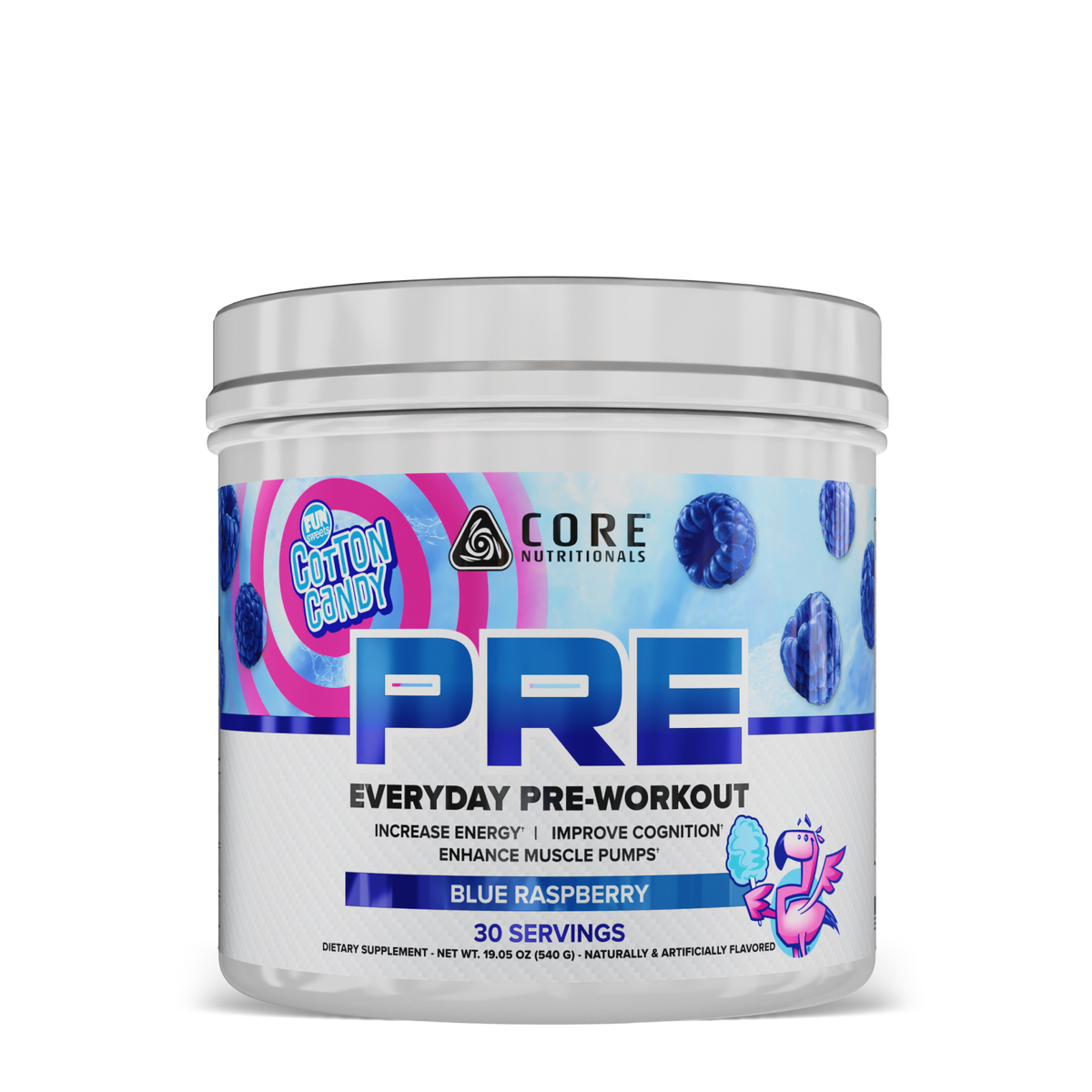

EVERYDAY PRE
-
Scientific Write-Up
Magnesium (as Magnesium Citrate), Sodium (as Sodium Citrate), Potassium (as Potassium Citrate)
Magnesium, sodium, and potassium are essential electrolytes involved in hydration, muscle contraction, nerve signaling, and numerous processes related to exercise performance. During physical activity — particularly prolonged or high-intensity exercise — electrolytes can be lost through sweat, increasing the importance of maintaining adequate electrolyte intake.
Magnesium participates in hundreds of enzymatic reactions throughout the body and contributes to normal energy metabolism, protein synthesis, nerve function, and muscle function. Magnesium is also involved in processes required for the production and utilization of ATP, the body's primary cellular energy currency. Because skeletal muscle repeatedly contracts and relaxes during exercise, maintaining adequate magnesium status is important for normal neuromuscular function.
Sodium is one of the body's primary extracellular electrolytes and plays a central role in fluid balance. Sodium helps the body retain fluid and maintain blood volume, making it particularly important when significant amounts of water and electrolytes are lost through sweat. Sodium is also necessary for normal nerve impulses and muscular contraction.
Potassium is another major electrolyte involved in maintaining fluid balance, nerve transmission, and normal muscular contraction. Whereas sodium is concentrated primarily outside cells, potassium is concentrated largely inside cells. Maintaining the appropriate balance between these electrolytes is essential for normal cellular and neuromuscular function.
Together, magnesium, sodium, and potassium provide foundational electrolyte support for active individuals. Their inclusion in Core PRE helps support hydration, normal muscle function, and the electrical signaling required for muscular contraction during exercise.
L-Citrulline
L-Citrulline is a non-essential amino acid and an important component of the urea cycle. Although citrulline itself is not incorporated directly into proteins, it serves as an effective precursor to arginine, which can subsequently be used by the body to produce nitric oxide.
This pathway is particularly relevant to exercise because nitric oxide acts as an important signaling molecule involved in vasodilation. By relaxing vascular smooth muscle, nitric oxide can increase blood flow and facilitate the delivery of oxygen and nutrients to working tissues.
Interestingly, consuming citrulline can be a more effective strategy for increasing circulating arginine concentrations than consuming arginine itself. Oral arginine undergoes substantial metabolism in the gastrointestinal tract and liver before reaching systemic circulation. Citrulline largely bypasses this initial metabolism and can subsequently be converted to arginine by the kidneys and other tissues.
This increase in arginine availability can support nitric oxide production and the blood-flow benefits associated with it. For athletes, this is commonly experienced as the increased muscular "pump" associated with resistance training.
Citrulline may also support exercise performance through mechanisms beyond nitric oxide. As part of the urea cycle, citrulline participates in the processing of nitrogen-containing compounds generated during metabolism. Research has investigated citrulline supplementation for its potential effects on muscular endurance, fatigue, and recovery during demanding exercise.
For Core PRE, L-Citrulline provides foundational pump and performance support while complementing the formula's other ingredients designed for high-intensity training.
Beta-Alanine
Beta-alanine is a non-essential amino acid best known for its ability to increase concentrations of carnosine within skeletal muscle.
Carnosine is a dipeptide composed of beta-alanine and histidine and is found in particularly high concentrations within skeletal muscle. One of its most important roles during exercise is functioning as an intracellular buffer.
During intense exercise, hydrogen ions accumulate within working muscle as a consequence of energy metabolism. This contributes to reductions in muscular pH and is one of several factors associated with the burning sensation and declining muscular performance experienced during demanding sets or repeated bouts of high-intensity activity.
Higher concentrations of intramuscular carnosine increase the muscle's buffering capacity. However, carnosine production is limited largely by the availability of beta-alanine rather than histidine. This makes supplemental beta-alanine an effective strategy for increasing muscle carnosine concentrations.
Unlike ingredients intended to produce an immediate effect, beta-alanine works primarily through consistent use. Repeated supplementation over time progressively increases muscle carnosine stores, which can improve the muscle's ability to buffer changes in pH during high-intensity exercise.
Research on beta-alanine has demonstrated improvements in various measures of high-intensity exercise performance, particularly during activities where muscular acidosis and fatigue become limiting factors.
For athletes and lifters, this can translate to greater capacity to maintain performance during challenging sets, repeated bouts of exercise, and training sessions requiring substantial muscular endurance.
The familiar tingling sensation sometimes experienced after consuming beta-alanine is known as paresthesia. While noticeable, this sensation is separate from beta-alanine's primary performance mechanism. The meaningful benefit comes from increasing muscle carnosine concentrations through consistent supplementation.
L-Taurine
Taurine is a naturally occurring sulfur-containing amino acid-like compound found in high concentrations throughout the body, particularly within skeletal muscle, the heart, brain, and other metabolically active tissues. Unlike many amino acids, taurine is not primarily used to build proteins. Instead, it performs several regulatory functions relevant to hydration, cellular function, and exercise.
One of taurine's important roles is functioning as an osmolyte, meaning it helps cells regulate their fluid balance and maintain normal cell volume. This makes taurine particularly relevant in a pre-workout formula containing electrolytes, where maintaining appropriate hydration and cellular fluid balance can support normal muscular function during exercise.
Taurine is also involved in calcium handling within muscle cells. Calcium plays a central role in muscular contraction, and taurine's involvement in maintaining normal intracellular calcium regulation provides another potential connection between taurine and muscular performance.
Exercise research has also investigated taurine for potential effects on endurance, muscular function, and fatigue. Although responses can vary depending on exercise type, dose, and training status, taurine's physiological roles make it particularly complementary to formulas designed to support performance and hydration.
Taurine also possesses antioxidant and membrane-stabilizing properties that help cells respond to physiological stress. Intense exercise increases metabolic demand and temporarily alters the cellular environment, making these regulatory functions relevant to athletes and active individuals.
Within Core PRE, taurine works alongside sodium, potassium, and magnesium to support hydration and normal cellular function while complementing the formula's overall performance profile.
L-Tyrosine
L-Tyrosine is an amino acid used by the body as a precursor for the production of several important catecholamine neurotransmitters, including dopamine, norepinephrine, and epinephrine.
These neurotransmitters play major roles in alertness, attention, motivation, and the body's response to physical and psychological stress. During demanding conditions, the rate at which catecholamines are utilized can increase, which has made tyrosine an ingredient of particular interest for supporting cognitive performance under stress.
After ingestion, tyrosine can be converted into L-DOPA through the enzyme tyrosine hydroxylase. L-DOPA can subsequently be converted into dopamine, which can then serve as a precursor to norepinephrine and epinephrine.
This pathway is especially relevant to pre-workout supplementation because intense training represents both a physical and mental stressor. Maintaining concentration, motivation, and attention becomes increasingly important as training intensity and fatigue increase.
Research examining tyrosine has focused heavily on situations involving acute stressors such as demanding cognitive tasks, cold exposure, sleep deprivation, and prolonged workload. Rather than functioning as a traditional stimulant, tyrosine provides nutritional substrate used in the body's normal catecholamine production pathways.
This makes L-Tyrosine particularly complementary to caffeine. While caffeine promotes alertness primarily through antagonism of adenosine receptors, tyrosine supports the underlying pathways responsible for producing catecholamine neurotransmitters.
Within Core PRE, L-Tyrosine contributes to the focus component of the formula, helping support cognitive performance, attention, and the ability to stay mentally engaged during demanding training sessions.
Choline Bitartrate
Choline is an essential nutrient involved in numerous physiological processes throughout the body, including cellular structure, lipid metabolism, nervous system function, and neurotransmitter production. While the body can synthesize small amounts of choline, endogenous production is generally insufficient to meet physiological requirements, making dietary choline important.
Choline bitartrate provides a supplemental source of choline.
One of choline's most important functions in the context of exercise is its role as a precursor to acetylcholine. Acetylcholine is an important neurotransmitter used throughout both the central and peripheral nervous systems.
At the neuromuscular junction, acetylcholine carries the signal from a motor neuron to skeletal muscle fibers, initiating the process that ultimately produces muscular contraction. Choline availability is therefore fundamentally connected to normal neuromuscular signaling.
Acetylcholine also performs important functions within the brain and is involved in attention, learning, memory, and other aspects of cognitive function.
Choline additionally serves as a structural component of phosphatidylcholine, one of the major phospholipids found within cellular membranes. It is also involved in lipid transport and normal metabolic processes throughout the body.
During prolonged exercise, circulating choline concentrations may decline under certain conditions, which has generated interest in maintaining adequate choline availability in athletes and highly active individuals.
Within Core PRE, choline bitartrate provides a dietary source of choline to support normal acetylcholine synthesis, nervous system function, and neuromuscular signaling. Combined with L-Tyrosine and caffeine, it contributes to the formula's overall focus and performance profile.
Caffeine Anhydrous
Caffeine is one of the world's most widely consumed psychoactive compounds and one of the most extensively studied performance-enhancing ingredients in sports nutrition.
Its primary mechanism involves antagonizing adenosine receptors in the central nervous system. Adenosine normally accumulates throughout the day and contributes to feelings of fatigue and reduced neural activity. By occupying adenosine receptors without activating them, caffeine temporarily reduces adenosine's ability to exert these effects.
The result is increased alertness, attention, and perceived energy — effects that make caffeine particularly useful before exercise.
Caffeine's benefits extend beyond simply "feeling energized." Research has repeatedly demonstrated its ability to support various aspects of exercise performance, including endurance, muscular endurance, vigilance, reaction time, and perceived effort.
Caffeine can also increase circulating catecholamines and influence several metabolic and neurological pathways involved in physical performance.
One particularly valuable effect during training is caffeine's influence on perceived exertion. When exercise feels slightly less difficult at a given workload, an athlete may be better able to maintain intensity, sustain effort, or complete additional training volume.
However, more caffeine is not necessarily better.
Core PRE provides 200mg of caffeine per serving, delivering a meaningful level of stimulation while maintaining the product's positioning as an essential pre-workout designed for consistent use.
Rather than relying on an unnecessarily aggressive stimulant load, Core PRE combines caffeine with L-Tyrosine and choline bitartrate for cognitive support while using L-Citrulline, beta-alanine, taurine, and electrolytes to address the physical demands of training.
The result is a balanced pre-workout designed around the fundamentals: energy, focus, pumps, endurance, and hydration.
References
-
Sawka MN, Burke LM, Eichner ER, Maughan RJ, Montain SJ, Stachenfeld NS. American College of Sports Medicine position stand: Exercise and fluid replacement. Medicine & Science in Sports & Exercise. 2007;39(2):377-390. doi:10.1249/mss.0b013e31802ca597.
Supports hydration, electrolyte balance, sweat replacement, sodium/fluid replacement, and exercise-related hydration recommendations.
-
McDermott BP, Anderson SA, Armstrong LE, et al. National Athletic Trainers' Association Position Statement: Fluid Replacement for the Physically Active. Journal of Athletic Training. 2017;52(9):877-895. doi:10.4085/1062-6050-52.9.02.
Useful for the overall hydration/electrolyte rationale.
-
Wang R, Chen C, Liu W, et al. The effect of magnesium supplementation on muscle fitness: a meta-analysis and systematic review. Magnesium Research. 2017;30(4):120-132. doi:10.1684/mrh.2018.0430.
Good source for magnesium's relationship with skeletal muscle function, while importantly noting that supplementation does not necessarily improve performance in magnesium-replete athletes.
-
Heffernan SM, Horner K, De Vito G, Conway GE. The Role of Mineral and Trace Element Supplementation in Exercise and Athletic Performance: A Systematic Review. Nutrients. 2019;11(3):696. doi:10.3390/nu11030696.
Broad systematic review covering magnesium, sodium and other minerals in exercise and athletic performance.
-
Vårvik FT, Bjørnsen T, Gonzalez AM. Acute Effect of Citrulline Malate on Repetition Performance During Strength Training: A Systematic Review and Meta-Analysis. International Journal of Sport Nutrition and Exercise Metabolism. 2021;31(4):350-358. doi:10.1123/ijsnem.2020-0295.
Eight studies involving 137 participants were included; the analysis found a small increase in repetitions performed with acute citrulline malate supplementation.
-
Trexler ET, Persky AM, Ryan ED, Schwartz TA, Stoner L, Smith-Ryan AE. Acute Effects of Citrulline Supplementation on High-Intensity Strength and Power Performance: A Systematic Review and Meta-Analysis. Sports Medicine. 2019.
Useful for the strength/power portion of the citrulline discussion.
-
Gough LA, Sparks SA, McNaughton LR, et al. A critical review of citrulline malate supplementation and exercise performance. European Journal of Applied Physiology. 2021;121(12):3283-3295.
Useful as a broader review of the mechanistic and performance evidence surrounding citrulline malate.
-
González-Hernández JM, et al. Effects of Citrulline Supplementation on Different Aerobic Exercise Performance Outcomes: A Systematic Review and Meta-Analysis. 2022. PMID: 36079738.
Important for keeping claims balanced: this meta-analysis did not find significant benefits for aerobic performance, RPE, VO₂ kinetics, or lactate.
-
Saunders B, Elliott-Sale K, Artioli GG, et al. β-alanine supplementation to improve exercise capacity and performance: a systematic review and meta-analysis. British Journal of Sports Medicine. 2017;51(8):658-669. doi:10.1136/bjsports-2016-096396.
This is one of the strongest references for the beta-alanine section. It included 40 studies, 65 exercise protocols, and 1,461 participants and found a statistically significant overall effect.
-
Hobson RM, Saunders B, Ball G, Harris RC, Sale C. Effects of β-alanine supplementation on exercise performance: a meta-analysis. Amino Acids. 2012;43(1):25-37. doi:10.1007/s00726-011-1200-z.
Found improvements particularly in exercise lasting 60–240 seconds, consistent with beta-alanine's role in increasing muscle carnosine and buffering H+.
-
Georgiou GD, Antoniou K, Antoniou S, et al. Effect of Beta-Alanine Supplementation on Maximal Intensity Exercise in Trained Young Male Individuals: A Systematic Review and Meta-Analysis. International Journal of Sport Nutrition and Exercise Metabolism. 2024;34(6):397-412. doi:10.1123/ijsnem.2024-0027.
A newer meta-analysis supporting beta-alanine for maximal-intensity exercise, particularly under specific supplementation durations and exercise conditions.
-
Zanella PB, Alves FD, de Souza CG. Effects of beta-alanine supplementation on performance and muscle fatigue in athletes and non-athletes of different sports: a systematic review. Journal of Sports Medicine and Physical Fitness. 2017;57(9):1132-1141. doi:10.23736/S0022-4707.16.06582-8.
-
Waldron M, Patterson SD, Tallent J, Jeffries O. The Effects of an Oral Taurine Dose and Supplementation Period on Endurance Exercise Performance in Humans: A Meta-Analysis. Sports Medicine. 2018;48(5):1247-1253. doi:10.1007/s40279-018-0896-2.
Meta-analysis examining isolated taurine supplementation at doses ranging from 1–6 g/day and endurance performance.
-
Chen Q, Li Z, Pinho RA, et al. The Dose Response of Taurine on Aerobic and Strength Exercises: A Systematic Review. Frontiers in Physiology. 2021;12:700352. doi:10.3389/fphys.2021.700352.
Particularly useful for supporting taurine's physiological roles involving ion regulation, cell volume, membrane stabilization, and exercise.
-
Deng H, Song T, Yin M, et al. Does One Shot Work? The Acute Impact of a Single Taurine Dose on Exercise Performance: A Meta-Analytic Review. Scandinavian Journal of Medicine & Science in Sports. 2025;35(9):e70123. doi:10.1111/sms.70123.
This newer meta-analysis included 23 randomized trials and found a small-to-moderate overall effect of acute taurine ingestion, although effects differed by exercise type and evidence for some outcomes remained inconsistent.
-
Jongkees BJ, Hommel B, Kühn S, Colzato LS. Effect of tyrosine supplementation on clinical and healthy populations under stress or cognitive demands—A review. Journal of Psychiatric Research. 2015;70:50-57. doi:10.1016/j.jpsychires.2015.08.014.
This is probably the best citation for your Core PRE tyrosine positioning. It supports tyrosine as a dopamine/norepinephrine precursor and indicates cognitive benefits are most apparent during short-term stressful or cognitively demanding situations.
-
Attipoe S, Zeno SA, Lee C, et al. Tyrosine for Mitigating Stress and Enhancing Performance in Healthy Adult Humans, a Rapid Evidence Assessment of the Literature. Military Medicine. 2015;180(7):754-765. doi:10.7205/MILMED-D-14-00594.
The review found insufficient evidence to recommend tyrosine for physical performance but some evidence supporting cognition under stressful conditions.
-
Hase A, Jung SE, aan het Rot M. Behavioral and cognitive effects of tyrosine intake in healthy human adults. Pharmacology Biochemistry and Behavior. 2015. doi:10.1016/j.pbb.2015.03.008.
The systematic review found little evidence for exercise-performance enhancement but evidence that acute tyrosine can help counter decrements in working memory and information processing under demanding conditions.
-
Warber JP, Patton JF, Tharion WJ, Zeisel SH, Mello RP, Kemnitz CP, Lieberman HR. The effects of choline supplementation on physical performance. International Journal of Sport Nutrition and Exercise Metabolism. 2000;10(2):170-181. doi:10.1123/ijsnem.10.2.170.
Choline supplementation substantially increased circulating choline in this trial but did not improve the measured physical-performance outcomes. This makes it useful for supporting choline availability, but not a direct ergogenic claim.
-
Deuster PA, Singh A, Coll R, Hyde DE, Becker WJ. Choline ingestion does not modify physical or cognitive performance. PMID: 12502178.
Again, supplemental choline increased plasma choline but did not improve physical or cognitive performance in the tested conditions.
-
Penry JT, Manore MM. Choline: an important micronutrient for maximal endurance-exercise performance? 2008. PMID: 18458362.
This review is particularly relevant to the statement about circulating choline potentially declining during strenuous, prolonged exercise. It concludes that significant declines appear primarily under prolonged strenuous activity and that supplementation may be most relevant when circulating choline actually falls below normal.
-
Guest NS, VanDusseldorp TA, Nelson MT, et al. International Society of Sports Nutrition position stand: caffeine and exercise performance. Journal of the International Society of Sports Nutrition. 2021;18(1):1. doi:10.1186/s12970-020-00383-4.
This should be the primary caffeine citation. The ISSN concluded that caffeine can acutely enhance numerous aspects of exercise performance, although individual responses vary.
-
Goldstein ER, Ziegenfuss T, Kalman D, et al. International Society of Sports Nutrition position stand: caffeine and performance. Journal of the International Society of Sports Nutrition. 2010;7:5. doi:10.1186/1550-2783-7-5.
Supports caffeine's established effects on endurance, vigilance, and certain forms of high-intensity exercise.
-
-


